Creative and Artistic Planner: A Thoughtfully Designed Tool for Modern Makers
Today’s creators—whether launching a KDP publishing venture, managing client projects as a freelance designer, or balancing teaching with personal art practice—need more than generic notebooks. They need structure that breathes with their process, not against it. The Creative and Artistic Planner meets that need precisely: a purpose-built, flexible system designed for clarity, adaptability, and real-world use—not just aesthetics.
Why This Planner Fits How People Actually Work Now
Workflow fragmentation is no longer the exception—it’s the norm. A graphic designer might sketch ideas in Procreate, draft copy in Notion, schedule social posts in Trello, and invoice clients via QuickBooks. Yet critical creative decisions, project timelines, color palettes, client feedback, and revision notes often scatter across apps, sticky notes, or forgotten tabs. That cognitive load adds up. Research in human-computer interaction shows that switching between tools more than five times per task can reduce focus retention by over 40%. The Creative and Artistic Planner doesn’t replace digital tools—it anchors them. It offers a consistent, tactile space to capture what matters most: intention, iteration, and insight.
This isn’t about nostalgia for paper. It’s about intentionality. When you choose an 8.5 x 11 inch format—practical, spacious, and printer-friendly—you’re choosing a size that supports both detailed sketching and structured planning without compromise. No bleed means clean, predictable margins whether printed at home, at a local print shop, or scaled for KDP. That consistency reduces friction—not just in output, but in daily use.
Designed for Multiple Roles, One Workflow
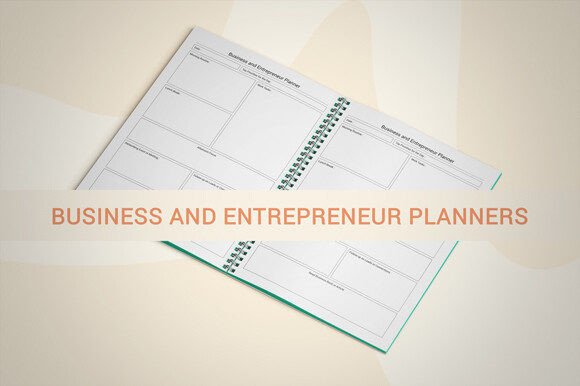
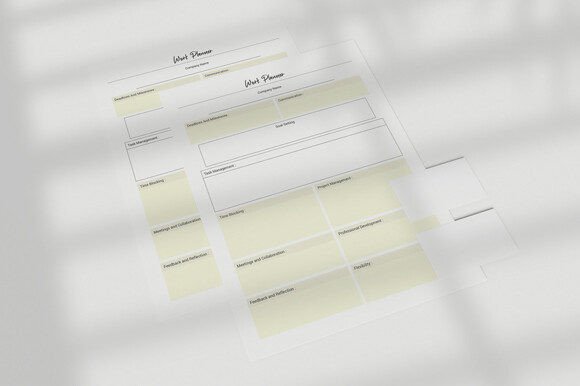
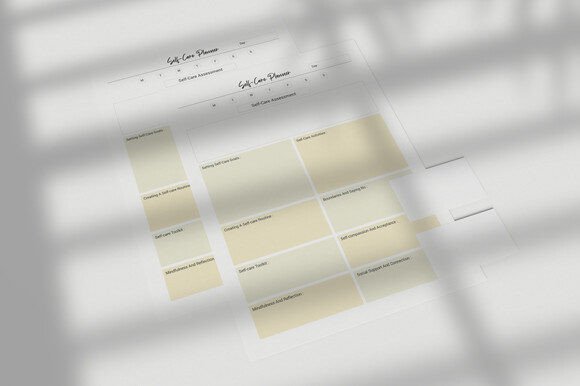
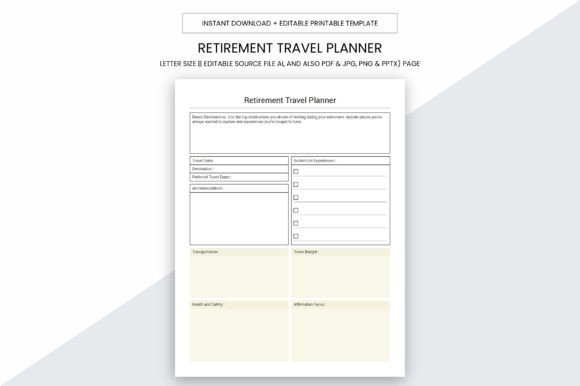
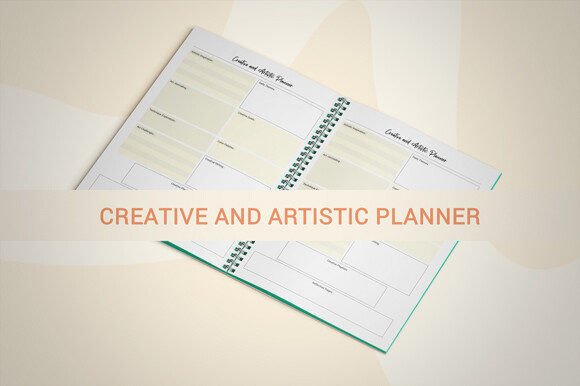
A planner built only for artists would miss the entrepreneur. One built only for business owners would lack room for mood boards or thumbnail sketches. The Creative and Artistic Planner bridges those gaps deliberately. Its 109-page interior includes dedicated sections for ideation, project tracking, resource logging, timeline mapping, and reflection—not as rigid templates, but as adaptable frameworks. A blogger can use the “Content Pipeline” spread to map seasonal themes alongside visual reference swatches. A small-batch ceramicist can pair production schedules with glaze test notes and photo placeholders. A KDP author can outline chapters, track royalties per title, and log cover design iterations—all in one place, all printable.
The inclusion of editable source files (.ai, .pptx) means professionals aren’t locked into static layouts. A marketing consultant can rebrand the cover for a client presentation. An educator can customize weekly lesson-planning spreads for student feedback prompts. Even the JPG and PNG exports serve practical needs: embedding planner pages into pitch decks, sharing editable timelines with collaborators, or creating branded social media assets. This flexibility reflects how modern work happens—fluidly, across roles, and often across platforms.
Print Quality That Supports Real Use—Not Just Display
High-resolution printing isn’t a luxury when your planner becomes part of your workflow. At 300 ppi, every line, grid, and illustration renders crisply—no pixelation, no muddy text, no faint shading that disappears under marker ink. That fidelity matters whether you’re hand-lettering a quote on a reflection page or printing full-color mood boards for a branding proposal. It also ensures compatibility with commercial printers, including those used for KDP paperback interiors. No guesswork, no last-minute formatting fixes—just upload the ready-to-print PDF and move forward.
“Ready to print” isn’t marketing language here. It’s functional reality. The absence of bleed eliminates trimming uncertainty. The CMYK-ready PDFs prevent unexpected color shifts. And because the file includes both print-optimized PDFs *and* editable vector assets, users who want deeper customization—like adding a custom logo to every header or adjusting spacing for left-handed writing—can do so without outsourcing or costly design help.
How It Aligns With Evolving Creative Habits
Creative professionals are increasingly rejecting one-size-fits-all productivity systems. Bullet journals offer freedom but demand time-intensive setup. Digital planners promise searchability but sacrifice spatial memory—the kind that helps you recall where you sketched a concept two months ago because of its position on the page. The Creative and Artistic Planner lands in the middle: structured enough to guide thinking, open enough to evolve with your process.
We’re also seeing a quiet shift toward “hybrid documentation”—blending analog capture with digital archiving. Artists photograph their planner pages to build portfolios; educators scan student-facing worksheets into LMS platforms; entrepreneurs embed planner screenshots in investor updates. The multiple export formats (PDF, JPG, PNG, PPTX, AI) support this naturally. You’re not choosing paper *or* pixels—you’re using both, intentionally.
Practical Implications Across Use Cases
For KDP creators: The 109-page interior isn’t arbitrary. It aligns closely with KDP’s interior requirements for standard 6” x 9” paperbacks (after resizing), minimizing layout adjustments. Page numbering, consistent margins, and typography hierarchy are pre-optimized—so you spend less time troubleshooting margins and more time refining content.
For service-based professionals: The “Client Project Tracker” section includes fields for scope notes, deadline buffers, asset handoff dates, and post-delivery follow-ups—designed to surface risks before they become delays. Unlike generic calendars, it anticipates the rhythm of creative work: research, revision, approval, delivery.
For educators and workshop facilitators: Blank grid pages double as sketch surfaces or collaborative whiteboard backups. The “Resource Log” spread supports cataloging physical supplies, digital assets, and licensing info—critical when managing classroom materials or paid course kits.
For hobbyists and lifelong learners: There’s space—not pressure—to document progress without performance anxiety. A watercolorist might use the “Color Study” spread to note pigment behavior across papers; a writer might track daily word count alongside emotional tone or energy level. The planner invites observation, not just output.
What Makes This More Than Just Another Downloadable Notebook
It’s the attention to operational detail. The 8.5 x 11 inch size fits standard tabloid printers and binders—no custom cutting. The no-bleed design respects real-world printing constraints, especially for small businesses using office-grade devices. The high-DPI files ensure fidelity whether you’re printing a single page for a client meeting or batch-producing 50 copies for a workshop. And because the source files are editable—not just layered PSDs but native Illustrator (.ai) files—true customization is possible without specialized software knowledge.
That combination—practical sizing, production-ready files, thoughtful interior architecture, and multi-role utility—is rare. Most printable planners optimize for either aesthetics or function. This one assumes you need both, and that your time is better spent creating than configuring.
A Tool That Grows With Your Practice
A good planner shouldn’t feel like a commitment—it should feel like support. The Creative and Artistic Planner avoids prescriptive rigidity. Its sections suggest pathways, not rules. You might skip the “Idea Validation Matrix” entirely—or return to it three times per project. You might print only the timeline pages for a current campaign and leave the rest digital. That adaptability mirrors how creative work actually unfolds: nonlinear, iterative, responsive.
As workflows continue evolving—toward more remote collaboration, more visual communication, and more intentional tool selection—the value of a well-considered physical-digital hybrid tool rises. Not as a relic, but as a stabilizing force. One that helps you see patterns across projects, protect creative energy, and ship work that reflects your standards—not just your speed.
If you’ve ever lost momentum because your tools didn’t match your rhythm, or spent hours formatting a planner instead of using it—this is built for you. It won’t solve every challenge. But it removes friction where it accumulates most: at the intersection of idea, action, and output.