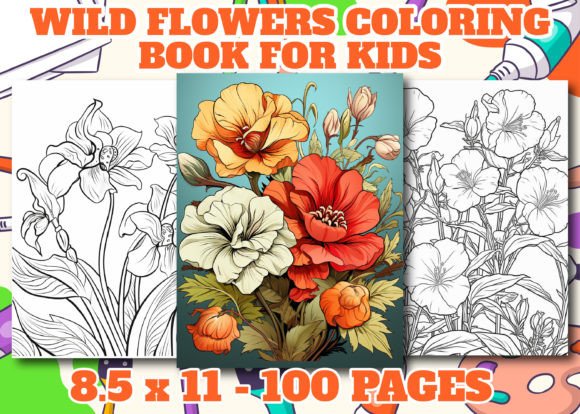
Wild Flowers Coloring Pages Adults
If you’ve ever scrolled through Amazon KDP searching for coloring books that stand out—not just in theme, but in quality, versatility, and real-world usability—you know how saturated the market is. What’s missing? Not more pages. Not more florals. But thoughtfully engineered coloring pages designed from the ground up for adults who color—and for entrepreneurs who sell.
Wild Flowers Coloring Pages Adults isn’t another generic collection of daisies and poppies. It’s a purpose-built, production-ready interior asset pack created specifically for creators, designers, and KDP publishers who value precision, flexibility, and professional polish. Think of it as your plug-and-play toolkit for launching a high-converting adult coloring book—fast, confidently, and without design guesswork.
Where This Fits Into Real Creative Workflows
Let’s talk about where this lands in everyday reality—not in a catalog description, but in actual use.
A freelance designer building a nature-themed journal series might drop one of the AI files into Illustrator, tweak line weight for a bolder print effect, and layer it with hand-lettered prompts—all before lunch. A small press owner prepping a seasonal “Spring Botanicals” release can pull the A4-sized PNGs straight into InDesign, align them to bleed-safe margins, and generate print-ready PDFs in under an hour. No resizing headaches. No pixelation at 300 DPI. Just clean, crisp linework ready for offset or POD.
And if you’re running multiple KDP listings? The dual-format delivery—50 JPGs and 50 PNGs—means you’re covered whether Amazon’s upload system prefers flat raster images or you need transparent layers for custom cover composites. The AI files? That’s your insurance policy: scalable vector art you can recolor, reformat, or repurpose for merch, social assets, or even digital sticker packs down the line.
Who Benefits—and How They Use It Differently
- KDP Publishers: You get 50 unique wildflower motifs—think foxgloves, Queen Anne’s lace, yarrow, black-eyed Susans—not clipart repeats. Each is centered on an A4/8.5" × 11" canvas, optimized for single-page printing. No awkward cropping. No trimming surprises. You can compile them into a 100-page interior (with title + intro pages), add your own branding, and publish in under 48 hours.
- Print-on-Demand Sellers: Since every file is delivered at true 300 DPI resolution, your products hold up beautifully on platforms like Redbubble, Printful, or Gelato—even on larger formats like posters or 12×16 canvases. Resize without degradation? Yes. Scale a buttercup illustration to fit a tote bag mockup? Absolutely. The AI source gives you that freedom.
- Therapy & Wellness Practitioners: Counselors, occupational therapists, and mindfulness coaches often use coloring as a grounding tool. These designs avoid over-complexity (no tiny mandalas inside petals) while offering enough detail to engage focus. The organic, untamed feel of wildflowers—versus cultivated garden blooms—resonates with clients seeking authenticity and gentle challenge.
- Educators & Nature Enthusiasts: Homeschoolers, botany clubs, or eco-education nonprofits use these pages for plant ID reinforcement. Pair a detailed echinacea outline with a short caption about pollinators—or print a set for a community “Color & Connect” event. The clean line art makes labeling, annotating, or laminating easy.
What Makes These Pages Actually Usable—Not Just Pretty
It’s easy to mistake “high-resolution” for “ready-to-sell.” But resolution alone doesn’t guarantee usability. Here’s what bridges that gap:
- No hidden gaps or stray pixels: Every JPG and PNG has been manually checked for anti-aliasing consistency and edge clarity—critical when printing on matte paper or textured cardstock.
- True A4/US Letter alignment: Files are built to 8.5" × 11" with safe margins baked in. No guessing where the trim line falls. No last-minute panic when your flower gets cut off at the stem.
- Cover image included—but not prescriptive: You get one polished cover JPEG, but it’s intentionally minimalist: clean typography, subtle botanical watermark, neutral background. Easy to rebrand, recrop, or replace entirely—no locked layers or embedded watermarks.
- .ZIP delivery = zero friction: Everything arrives in one folder—no scattered emails, no expired links, no platform-specific logins. Extract and go.
Things to Keep in Mind Before You Launch
This pack excels when you understand its role in your process—not as magic, but as leverage.
First: It’s an interior resource, not a full book. You’ll still craft your title, subtitle, introduction, and back matter. That’s intentional. It keeps your brand voice front and center—and lets you tailor tone to your audience (e.g., “Botanical Calm for Busy Minds” vs. “Wildflower Therapy: A Grounding Practice”).
Second: While all 50 designs are distinct, they share a cohesive style—organic linework, balanced negative space, moderate intricacy. That’s a strength for branding consistency, but it means this isn’t the right fit if you’re chasing maximalist, psychedelic, or ultra-minimalist aesthetics. Know your niche—and match accordingly.
Third: The AI files require Adobe Illustrator (or compatible vector software) to edit fully. If you only use Canva or free editors, lean on the JPG/PNGs—they’re production-ready as-is. You don’t need vectors to succeed; they’re just there when you do.
Why “Wild Flowers” Hits a Sweet Spot Right Now
Search data shows steady, year-round interest in “wildflower coloring pages,” especially paired with terms like “anxiety relief,” “nature therapy,” and “botanical journal.” Unlike trend-driven themes (think unicorns or astrology), wildflowers carry quiet, enduring appeal: grounded, accessible, ecologically resonant. They speak to adults craving connection—not escapism.
That resonance translates to better engagement. Customers linger longer on listings with authentic botanical accuracy. They leave reviews like *“Finally, flowers I can actually identify!”* or *“The line weight is perfect—no bleeding, even with my gel pens.”* Those details build trust. And trust builds repeat buyers.
Plus, wildflowers sidestep seasonal fatigue. A lavender page works in spring, summer, or fall. A goldenrod design feels equally at home in a “Back to Calm” August launch or a “Winter Wildcrafting” December bundle. That flexibility extends your product’s shelf life—without extra design work.
Real Talk About Limitations—So You’re Not Surprised Later
This isn’t clipart. It’s not animated. It won’t auto-generate alternate versions (left-handed layouts, grayscale variants, etc.). You get what’s listed—50 original illustrations, three formats each, one cover—and nothing more. That’s by design: focused scope means consistent quality, not diluted effort.
Also worth noting: these are line-art only. No grayscale shading, no watercolor overlays, no textured backgrounds. That’s intentional for KDP compatibility (solid lines reproduce most reliably across printers) and user control (colorists choose their own medium, pressure, and palette). If you want layered effects, you’ll add them yourself—using the AI files as your base.
Lastly, while the files are royalty-free for commercial use, they’re licensed for end-product creation—not resale as standalone digital assets. So yes, you can sell the coloring book on Amazon. You cannot resell the ZIP file on Etsy as “Wildflower Clipart.” That protects both you and the creator.